A garage door usually gets attention only when it stops doing what it should. It sticks halfway up on a humid morning, grinds as it opens, or reverses for no obvious reason when you are trying to leave for work. By then, what could have been a routine service call has often become a larger repair.
For Gold Coast homes, garage doors work in conditions that are not especially forgiving. Salt air, humidity, and heat can affect hardware over time, and that matters more than many homeowners realise. A door that was smooth and quiet when it was installed can gradually move out of balance, lose alignment, or place extra strain on its motor and moving parts. The result is not always dramatic. More often, it starts with small changes: a slower close, a scrape near one side, a remote that seems inconsistent, or a door that suddenly feels heavier than it used to.
Most local garage door companies handle the full spread of work, including repairs, servicing, installation, and replacement of parts such as motors, remotes, and springs. That range reflects a simple truth. Garage doors are systems, not single parts. If one component wears or shifts, it affects the others. Good maintenance is really about understanding those interactions before a minor fault becomes a major failure.
Why alignment matters more than people think
Garage door alignment sounds like a narrow technical issue, but it sits at the centre of how the whole door behaves. When a door is properly aligned, it travels evenly, seals more consistently, and puts less stress on the opener and hardware. When it is not, every movement can become a little harder than it should be.
In practical terms, misalignment often shows up as uneven gaps, rubbing, jerky travel, or a door that appears to lean slightly as it moves. Sometimes the problem is obvious. At other times, the clues are subtle enough that homeowners put them down to age or weather. The difficulty is that a small alignment A1 garage doors gold coast qld issue rarely stays small. If the door is dragging or running unevenly, the motor may work harder. If the door is unbalanced, other components can wear faster.
That is one reason garage door alignment should never be treated as cosmetic. It affects function, reliability, and the long term cost of ownership. A door can still open and close while being out of alignment, but that does not mean it is operating safely or efficiently.
On the Gold Coast, environmental conditions add another layer. Salt and moisture can contribute to wear in metal components, while heat can expose weaknesses that might not be as noticeable in milder conditions. A well-aligned door tends to cope better. A poorly aligned one often reveals its problems sooner.
The signs a garage door needs attention
Most service calls begin with a symptom, not a diagnosis. Homeowners notice what the door is doing, not necessarily why it is doing it. That is normal. The important part is recognising when a change in behaviour points to a real mechanical issue.
Here are some of the most common signs that a garage door should be serviced or repaired:
The door becomes noisy, uneven, or jerky during travel. The opener struggles, hesitates, or sounds like it is working harder than usual. The door starts reversing, especially if the garage door is not closing properly. The bottom edge no longer appears to meet the floor evenly. Remotes or motor functions become unreliable, even after basic battery checks.A single symptom does not always reveal the exact fault, but patterns matter. A noisy motor on its own may not mean motor failure. A door that is noisy and also slow to close suggests a wider problem. Likewise, if the garage door not closing properly becomes a recurring issue rather than a one off annoyance, the cause may involve alignment, the opener, or another part of the system rather than a simple remote problem.
What a proper service actually covers
Homeowners sometimes think of servicing as little more than lubrication. In reality, a proper garage door service is broader than that. It is the scheduled inspection and adjustment work that helps identify wear before a breakdown occurs. At least one Gold Coast provider recommends professional servicing every 12 months to help prevent breakdowns and extend the life of both the door and the motor. That advice lines up with what experienced technicians see in the field. Doors that receive regular attention are often easier to keep reliable than those left untouched for years.
Servicing can include checking the condition and operation of the door, reviewing the opener, inspecting springs and hardware, assessing travel, and identifying components that are worn or nearing the end of their useful life. If the door has begun shifting out of true, garage door alignment may be part of that work as well.
The value of a service is often in what it prevents. A motor under strain may still function today, but if the underlying issue is a door that has become harder to move, replacing only the motor may not solve the real problem. The same applies to remotes. If operation is inconsistent, the remote might be the culprit, but it could also point to a motor or system issue that needs a closer look.
Routine servicing is also the right time to talk through whether an existing manual or older door setup could benefit from automation upgrades. Gold Coast companies do offer motor replacement, installation, and automation upgrades for existing garage doors, and that can make sense when the underlying door remains in serviceable condition. The key is matching the upgrade to the state of the whole system, not just adding a new motor to a door that already has unresolved mechanical issues.
When repairs are straightforward, and when they are not
Some garage door jobs are relatively direct. Replacing a faulty remote, diagnosing a motor issue, or servicing a door that has become noisy can often be handled without major reconstruction. Other repairs carry more risk and require much more care.
Spring work sits firmly in that second category. Springs are under high tension and are dangerous to adjust or repair without proper training and tools. That is not a cautious sales line. It is a basic safety fact. A spring that looks like a simple metal component can store enough force to cause serious injury if mishandled.
This is where many DIY instincts should stop. Homeowners often search for ways to fix garage door problems themselves, especially when the fault appears visible and localised. But springs are not a trial and error repair. They demand the right equipment, the right process, and the judgment to know what else should be assessed at the same time.
There is another point worth knowing. When one spring breaks, both springs may need replacement because they usually wear at a similar rate. Installing one new spring beside one older spring can create balance problems. That is the sort of detail that experienced technicians watch for and that most homeowners understandably do not. It also shows why a repair is not always about replacing the part that has obviously failed. Balance matters, and garage door systems rely on that balance more than people expect.
Garage door opener repair is often only part of the story
A faulty opener attracts attention quickly because it is the part people interact with most. Press the remote, hear the motor, watch the door move, or fail to move. That makes it tempting to assume the opener is the problem whenever the system misbehaves.
Sometimes it is. Garage door opener repair is a common service, and in some cases motor replacement is the sensible path, especially if a unit has reached the point where repair no longer makes practical sense. Gold Coast service providers also offer new motor installation and automation upgrades, so there are options when older systems become unreliable.
Even so, a good diagnosis does not stop at the opener. If a motor is straining because the door is out of alignment or the springs are no longer supporting the load properly, repairing or replacing the opener alone may only treat the symptom. The new or repaired opener then inherits the same mechanical burden that damaged the previous one.
That is why a skilled technician usually looks at the door as a system. Is the door tracking evenly. Is it balanced correctly. Are there signs of strain elsewhere. Does the closing issue point to motor trouble, alignment trouble, or another mechanical fault. Those questions matter because they shape whether the right answer is garage door opener repair, a broader service, or a combination of both.
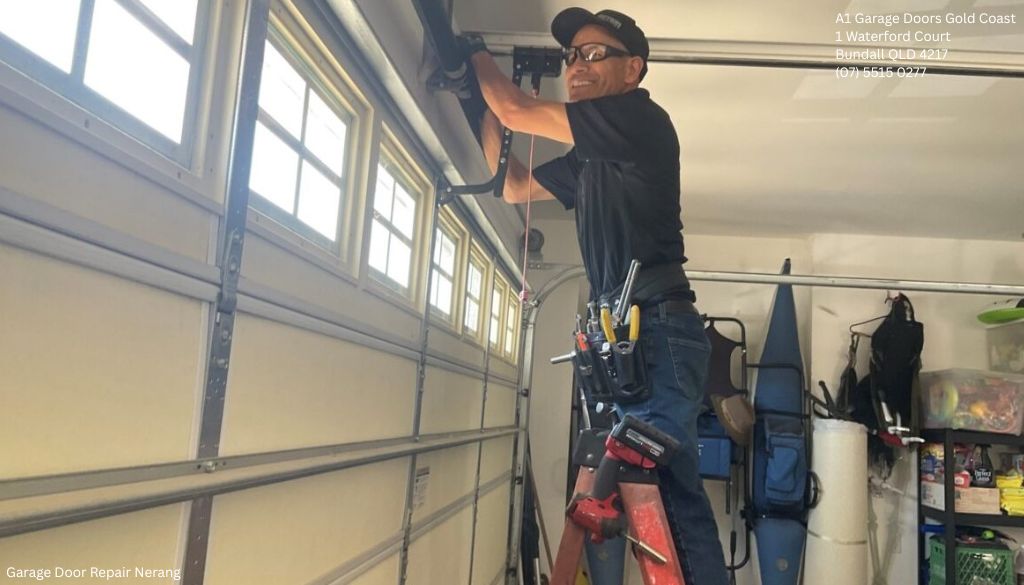
In real homes, the line between these problems is often blurry. A homeowner may report that the remote seems weak, but the deeper issue is that the opener is working against a door that no longer moves freely. Another may focus on the door reversing at the bottom, when the more useful diagnosis is that the system needs adjustment and service rather than a quick reset.
When a garage door is not closing properly
Few issues frustrate homeowners faster than a garage door not closing properly. It feels urgent, and for obvious reasons. Security, access, and weather protection all depend on that final movement being consistent.
The cause is not always visible from the driveway. A door may stop short, reverse unexpectedly, or close unevenly because alignment has shifted, a motor is failing, or another component has worn beyond tolerance. Sometimes the door is trying to tell you several things at once. The scraping sound you ignored last month and the reversing problem you noticed this week may come from the same root issue.
In homes near the coast, it is also worth taking recurring closing problems seriously rather than waiting for complete failure. Exposure to salt air and humidity can gradually affect hardware, and once a door starts moving unevenly, the closing cycle is often where that weakness becomes most obvious. The heavier feel at the bottom of travel, the slight twist on descent, or the motor labouring during the last few inches are all clues that should not be brushed aside.
A professional assessment is usually the fastest way to separate minor adjustment needs from more involved repairs. That matters because repeated attempts to force operation through the opener can add stress to parts that are already compromised.
Repair, replace, or upgrade?
Homeowners often want a simple answer: should I repair the current door, replace a part, or upgrade the whole setup? The honest answer depends on the condition of the existing system and what has actually failed.
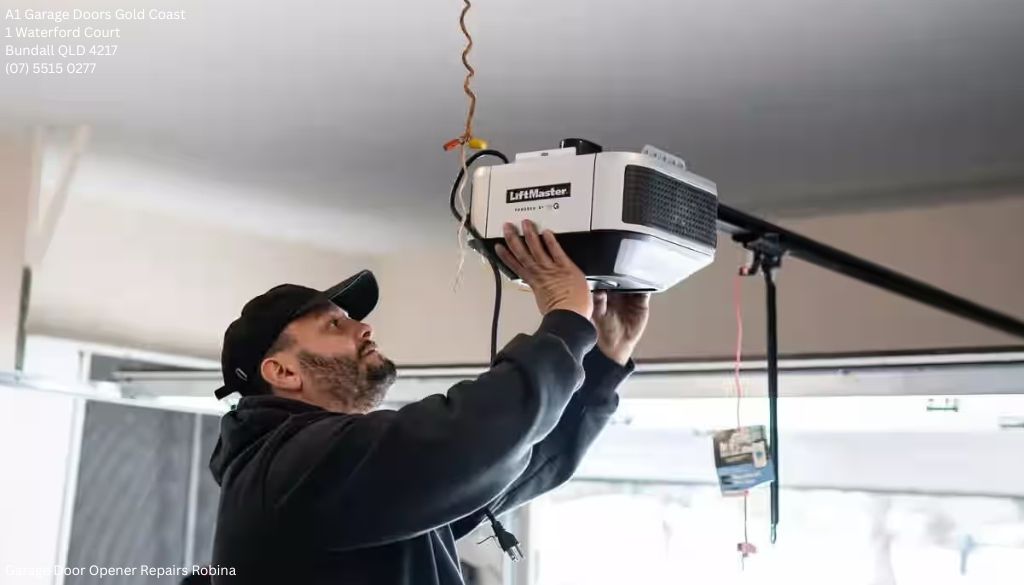
If the door itself remains sound and the issue is isolated to a motor, remote, or specific worn component, repair or targeted replacement may be appropriate. If the current setup is manual or outdated but mechanically serviceable, automation upgrades can be a practical improvement. Gold Coast businesses do provide these upgrades for existing garage doors, which gives homeowners flexibility when they want modern convenience without replacing the entire door.
Where judgment becomes important is in avoiding partial fixes that ignore the broader condition of the system. A new motor fitted to a poorly aligned door may improve convenience for a while, but if the underlying movement problem remains, that benefit can be short lived. Similarly, replacing a single spring when the pair has aged together may create fresh balance issues rather than resolving the old one.
A useful way to think about it is to ask not only what has failed, but what else has been affected by that failure. Systems wear together. Repairs should reflect that.
What homeowners can safely do, and what should stay with a technician
There is a sensible middle ground between neglect and risky DIY work. Homeowners do not need to become garage door specialists, but they should know what observations are useful and where the safety boundary sits.
The following actions are generally reasonable for homeowners:
Notice changes in noise, speed, or smoothness. Check whether remotes need fresh batteries before assuming a larger fault. Look for obvious unevenness or gaps when the door is closed. Arrange servicing if the door starts behaving differently, even if it still operates. Leave springs and high tension components to trained professionals.That last point is the one that matters most. If you are looking up how to fix garage door issues and the suspected fault involves springs, stop there and call for help. The danger is real, and the cost of getting it wrong is far higher than the cost of a proper repair.
The Gold Coast factor
Garage doors in the Gold Coast region live with conditions that shape maintenance needs in a very practical way. Salt air, humidity, and heat are not abstract environmental notes. They influence how hardware ages and how often attention is needed.
This does not mean every coastal garage door will fail early or need constant repairs. It means neglect is less forgiving. A door that might get away with long service gaps in a milder environment may start showing symptoms sooner near the coast. Hinges, springs, tracks, motors, and general hardware all depend on regular assessment if you want to avoid surprise breakdowns.
That is one reason annual professional servicing is a sensible benchmark for many homes. It gives a technician a chance to catch developing alignment problems, identify wear in moving parts, and assess whether the opener is operating under normal load. For households that use the garage as the main point of entry, that kind of preventive care is not excessive. It is practical.
There is also a comfort factor that gets overlooked. A well serviced garage door is usually quieter, more predictable, and less likely to fail when the weather turns or the family schedule is already tight. Those benefits are easy to underestimate until the day the door sticks half open and suddenly dictates the rest of your morning.
Choosing the right response early
The biggest mistake homeowners make with garage doors is rarely a dramatic one. More often, it is delay. The door still works, mostly. The noise is irritating but not unbearable. The opener seems a bit slower, but it gets there. Then a minor issue compounds into a failed motor, a broken spring, or a door that no longer closes securely.
Early attention changes that pattern. If garage door alignment has shifted, correcting it sooner can reduce strain elsewhere. If the opener is beginning to fail, a proper assessment can show whether garage door opener repair is enough or whether the motor should be replaced. If a spring has broken, the technician can assess whether both springs should be changed to avoid balance problems.
For Gold Coast homes, the smart approach is not to wait for complete failure. It is to treat odd behaviour as useful information. A door that is noisier, rougher, or harder to close is giving notice that something has changed. Responding while the system is still mostly functional usually gives you more options, lower risk, and a better chance of avoiding urgent repairs.
Garage doors are easy to take for granted because they perform the same task every day. Yet the systems behind that simple motion are under real mechanical demand, and local coastal conditions do them no favours. With regular servicing, timely repairs, and a healthy respect for high tension components, most problems can be managed before they turn into larger, more expensive ones. That is the real value of paying attention early. It keeps the door aligned, the motor protected, and the household moving without unnecessary disruption.